


TRAINING OF PROMOTERS: ANYHOW RELEVANT?
BACKGROUND INFORMATION
An inventory done in September 2018 indicated a total of 18579 MVIWATA Promoters who are smallholder farmers developed to cater as community change agents in their areas, the idea which was sought from the initial stage of MVIWATA development to ensure that MVIWATA produces
MVIWATA, upon implementing its Strategic Plan 2017/2021, facilitates leadership training programs, amongst its other initiatives, sought towards producing change agents, tasked to extend such knowledge amongst their peers in their respective backgrounds. Through this program, MVIWATA seeks to build and strengthen the capacity of small-scale farmers in different aspects, altogether with intent in equipping and sharpening their ability in finding solutions to the different constraints posed against them.
In alignment with its strategic goal Number 5 in the Strategic plan 2017- 2021 ,MVIWATA has a leadership training program to its members with the aim of producing change agents in rural areas (termed as PROMOTERS) who will be able to train and mobilize their fellow farmers. This training program aims at building the capacity of small scale farmers in different perspectives so as to equip and sharpen their abilities to find solutions to different challenges posed to their communities.
OBJECTIVES OF THE TRAININGS
The overall objective of the trainings were, To strengthen and build community engagement skills amongst promoters towards promoting good governance and small-hold farming through strong MVIWATA networks which are able to lobby and advocate for the farmers challenges.
Specifically the trainings aimed at;
- Revisiting and sharing experiences from different farming communities.
- Develop understanding of participants about the basics towards MVIWATA philosophy, mission and vision.
- To capacitate participants with community mobilization skills and methodologies to cope with the different group dynamics
- To capacitate promoters with knowledge that will be a key for enhancing the potential of farmers’ groups and networks in solving their problems and perform their tasks effectively
- To capacitate participants learning and practicing traits of a good trainer and admirable attitudes towards training others.
- Analyzing the historical setting and development of the land ownership system;
- Promoting the understanding (civic education) on the relationship and relevance of laws and policies to small-scale producers;
- Addressing on preservation, protection and use of natural resources for ensuring sustainable development;
- Building capacity on solidarity economics (through loans, savings and financial management) amongst small-scale producers;
- Facilitating a broadened theoretical and practical understanding on agri-preneurship; and
- Initiating discussions on Gender, HIV/AIDS and Nutrition and Hygiene
This report is thus prepared to narrate some success stories from the field to show the actions brought forward by Promoters all being attributed to the prior training that they got in a 1 month training period divided into two sessions of two weeks each.
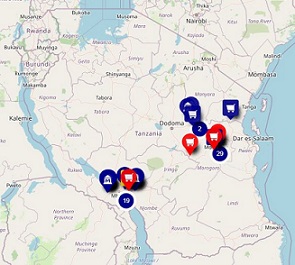
The promoters training workshops that engaged small scale farmers from Shinyanga, Ruvuma and Morogoro instigated a sheer sense and spirit of desire and drive to become change agents vide putting into practice the lessons learnt from the two weeks training course, conducted at Kinole and Tawa Training Center.
The first phase two weeks training covers the following topics;
- Understanding MVIWATA (MVIWATA History, mission, vision, strategy and philosophy)
- Group and Network Concepts
- Communication
- Group and Network Leadership
- MVIWATA Constitution
- Lobbying and Advocacy
- Planning, Monitoring and Evaluation
- Facilitation skills
The second phase two weeks training courses covered the following topics;
- Land Law: Analysis of the Origin and Legal Context of the Question of Land (and its Conflicts therein), The village Land Law
- Gender and Development
- Sustainable Agriculture
- Global Warming and Climate Change
- PETS (Public Expenditure Tracking System)
- Animation
- Entrepreneurship and Agriculture
CASE STUDIES
Tracking Progress of the Promoters’ Endeavors: Living the Spirit or leaving it at the training centres?
Post the 2nd batch training workshop of the promoters, the participants went on to undertake different measures in putting the lessons learnt into practice. Thus saying, hereunder are highlighted some of the field and practical experiences of the participants to the workshop.
- Resisting Embezzlement and Promoting Accountability in the Villages (PETS/ UMMAPESA)
“Subsequent to the solid legal foundations, the brief and general understanding on and over our basic rights, particularly those enshrined in the Constitution, offered us sheer light as to our entitlements and provided us the courage and shield in questioning the traits and trends of our leaders in the village. Even when we were threatened, unlike the prior days, we upheld to our stance since we were certain of our constitutional right to question the authorities’ accountability and demanding reasonable and rational response.”
The aforementioned account was expressed in different accounts by Dionisia and Florence as to how they cornered the Village Chairperson and Village Executive Director over the loss of Tshs. 16 Million. Consequent to their boldness the respective village heads were ousted and they (the villagers) were promised an official government auditing ought to be conducted to substantiate the claims. Further such findings were sought to compliment the prospective legal case to be brought against the respective village leaders.
Elsewhere, Hamidu, another participant from Ruvuma, together with other villagers triumphantly pressed for the ousting of the Chairperson of Kilangalanga village upon numerous claims of illegally and unlawfully transferring/ selling village land. And same was the fate for the village chairperson of Mkotamo, whom Fatuma (a participant to the workshop) and other villagers queried over his incompetency resulting to stalling the progress and development of their respective village.
- Agroecology (Sustainable Agriculture)
The two weeks training course to the first batch trainees from Ruvuma, Morogoro and Shinyanga precipitated an intense discussion amongst the participants on the scope, context and fate of agriculture in their respective localities. Intensive discussions saw the participants, and the facilitator to this particular topic, collectively subscribing to the essence of agro ecological farming systems in the course of achieving food sovereignty. And in their different capacity, participants went ahead to fulfill their expectations by living the agroecology dream.
Narrating on their experience in engaging in Organic Farming, Zamda and Hamidu (alias Afisa Ughani) described their respective, diverse yet similar, initiative of reconnecting with the “traditional” means of farming by enquiring local seeds from the village elders. This undertaking was basically sought to uphold the essence of sustainable agriculture; unlike the industrial/ factory seeds which are of a disposable character (once used then cannot be reused) the local seeds are on the other hand reusable and thus altogether promotes traits of self reliance
In a detailed conversation with Hamidu, he elucidated to have divorced his industrial darling seed, Chapa Tembo 719, and instead opted to tie knots with the local seeds. Zamda, on her case however transformed her farming ways only half way, as she was not able to get enough seeds to plant in the entire farm. Despite such a setback, desirous to practice sustainable agriculture, Zamda noted to have prepared her farm in the traditional and organic ways without using even a drop of factory/ industrial chemicals.
On the other hand Mzee Juma, a trainee from Shinyanga took an initiative of training Primary school students on the procedures of preparing compost manure dreaming on establishing MVIWATA school club in the school with an initiative of training the young people on agriculture and agroecological ways of farming.
- Environmental Friendliness (Climate Change adaptation and mitigation)
Elucidating on the significant changes in seasons and its unpredictable nature, these days, with tremendous downpours and severe dryness, the topic of climate change traced on the causative agents, effects and challenges related to the aspect of climate change. Broad discussions thereon established this to be a global concern, but the participants collectively established that they would not wait for global initiatives, as they are going to become local “Ambassadors of the Environment,” in the course of protecting, preserving and promoting the environment.
In so doing, Hamidu, a participant to the training workshop, took this topic to heart, whereas as foremost he internalized his understanding on this aspect of Climate Change by reading and re-reading the training book, titled “Mabadiliko ya Tabia Nchi” provided to the participants in the training. Further, he went on to coordinate the planting of 1000 trees in his locality as an attempt to counter climate change.
“I mobilized a group of 10 youths (6 males and 4 females) and we established a tree nursery by transplanting 1000 trees in containers (viriba). The actual target is planting 8000 trees. This target however is challenging as I am overwhelmingly faced with shortage of containers (viriba), whereas other trees (miche) I have actually transplanted in bottles.”
- Challenging the Gender Disparities (Gender and Development)
Amongst all other topics, the topic of Gender and Development gave rise to intense and heated (but still warm and friendly) debates amongst the participants during the training. Perpetrating the theoretical traits and elements of gender balance, the participants got to practice and live the gender balance experience. Altogether, despite their age and sex orientation, participants cleaned dishes, swept, slashed, mopped, cleaned toilets, picked litters, assisted in cooking and took part in the works of the garden.
With the practical experience, the participants were urged to go and live the experience in their respective houses, families and communities. Mzee Juma, a participant of the training workshop from Shinyanga, on his hand expresses as to how his perspective has changed and so to how such change has impacted his approach to life. Although he claims that he has changed entirely and not that he takes part in all social/ domestic activities at home, as he did during the two weeks training, but still Mzee Juma acknowledges that unlike the past (before the training) he now, at least, takes time to light fire for cooking.
- Socializing the Knowledge
Essentially, the training of promoters was sought to build capacity to the participants of the training workshop with intent such participants to become change agents in their respective communities. Further, such knowledge was sought to be shared by the promoters amongst other community members and such was expressed to have been propagated by the promoters.
Fatuma, a participant to the training from Ruvuma, explained as to how she has been helping in understanding the law amongst her community members and trying to resolve or suggest some conflicts related to land (and other) issues. And in her doing, like other participants to the workshop, she also been seeking legal consultation from the legal facilitator to the training.
Dionisia has sparked a sense of admiration and inspiration amongst fellow women upon advocating for the community rights and thus established a foundation/ precedence amongst other women to engage in community affairs. And further she convinced them as to their role and position in tracking the public expenditure and in promoting accountability.
Elsewhere, Mzee Juma conducted a seminar amongst 13 year old students as to how to prepare composite and animal manure. Such a seminar was meant to transmit the “traditional” knowledge to the younger generation and further stir up the sense of engaging with the organic farming and subscribing to food sovereignty from an early age.
LESSONS LEARNT
- More emphasis on understanding of the major essence of the law. It would indeed be a great deal of work to equip people with the absolute understanding of the law, but it would indeed be essential for these people to grab the basics of what entails to law prior bombarding them with respective laws as to either land and so forth. And in this case it is entirely crucial for there to be a set a basic understanding on the relevance and relationship between law and society
- In specific terms, suggestion is for the separate learning on Land law (village land law) and policies, a sub training on local authority administration related laws (crucial in understanding the means and modes of operation within the local government authorities) be done and also the basic of criminal procedural law for promoters (who may be at risk in their accountability tracking work)
- Having resources simplified explaining about the laws and for this case a simplified format of the Village Land Law which was developed by the Legal Officer who trained the first batch second session training in Kilosa Training Centre served a great purpose in helping the trainees digest the Land law easily.