


Crop yields are an essential aspect of every smallholder farmer’s day, impacting how profitable their farmland can be. Learning how to improve crop yields is key to successful farming, and access to new technologies and planting methods has given smallholder farmers an opportunity to increase crop production – the key to maintaining the long term sustainability of their farm.
Onion and garlic yield rates have steadily increased over time to smallholder farmers in Hanang and Mbulu Districts in Manyara region, thanks to harder facilitation efforts by MVIWATA for smarter planting practices. Practices and technologies that allow farmers to best understand their soil, what kind of nutrients they may be lacking, and when to plant onions and garlic have positively affected outcomes.
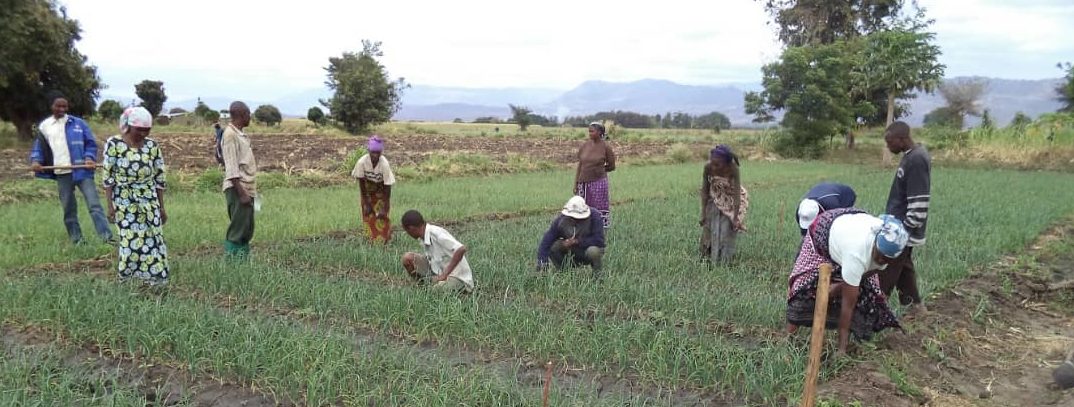
Prior to trainings and interventions by MVIWATA, many smallholder farmers were unaware that good yields were the result of good agricultural practices. MVIWATA – Manyara a middle level network is supporting smallholder farmers’ members of MVIWATA through field practical trainings on the necessity of good agricultural practices for onion and garlic production.
Smallholder farmers along the value chains on onions and garlic continues to deploy knowledge and skills given by MVIWATA. Members of MVIWATA in Hanang and Mbulu Districts organized in their respective groups got the practical training on how to prepare farms for the production of onion and garlic. The techniques included planting early and effectively, Practice seasonal soil rotation, knowing the yield potential, always scouting the fields, ensuring proper water drainage, utilizing natural fertilizers, tested soil, weeding early and often and seed quality to mention few.
These sustainable farming techniques can easily increase yields of the onion and garlic, while regenerating soil and reducing carbon footprints, all at low cost using indigenous technology available in smallholder farmers’ localities.
MVIWATA mission is to unite smallholder farmers in groups and networks in order to protect their interests through capacity development, facilitating communication and advocacy on policies and systems